Sunday, August 9, 2020

 DIY Rod vault

I put together a video on how to build a rod vault for just a tad over $100. Here's the Youtube link - https://youtu.be/3yXyrVw7gug


Thursday, September 28, 2017


A Perspective that Too Few See - Fires of 2017 - Eastern Montana

The above link is to an article written by August Schield, a Montana college student. In addition to his fine writing, where he deftly crafts an apolitical style while writing about potentially political topics, he's also an excellent photographer. He's not one of my students, but the son of a friend of mine, but give it a read and I think you will be impressed by the fine work and you will get a sense of why I love working with college students in general. I get so tired of hearing the negative views of college students from those who haven't been on a college campus recently, especially when I see work like this. Read some of the other fine posts on this blog to get a better perspective on a way of life that far too few urban types get to see.

Thursday, April 6, 2017

What my students do...

During my time at the University of Northern Colorado, and at Black Hills State University before that, I've been blessed by working with some really outstanding students. Although several conducted research on active volcanoes with me, most were accomplished professionals before finding their way into my office. One great example is my former student Adam LeWinter. Prior to attending UNC, Adam worked for the Extreme Ice Survey (EIS) that was featured in the award-winning documentary "Chasing Ice" (check it out on Netflix if you haven't yet seen it).  This video by the UNC press group talks about his work on both glaciers with EIS and volcanoes at UNC. Enjoy!


Tuesday, March 21, 2017

Galapagos and Sub-Saharan Africa video by Greg Walsh

My friends know how much I rave about Namibia. It's the most stunning place I've ever visited, and this video by my friend and videographer Greg Walsh shows some of Namibia's most stunning landscapes. The first part covers his travels to the Galapagos, followed by footage from Amboseli National Park in Kenya, Victoria Falls on the Zambia/Zimbabwe border, Chobe National Park in Botswana, and finally Sossusvlei in Namibia (the beautiful, sandy landscape that appears at 6:30). I find the Amboseli and Sossusvlei sections the most spectacular. Enjoy!


.

Thursday, March 16, 2017

Travel to Mars!

This is amazing!!!  There are a few things that you should keep in mind as you watch this. First, we know more about the topography of Mars than we do Earth (our ocean floors are poorly covered). Mars is ~1/2 the diameter of Earth, has ~1/3 of the gravity, liquid water is not stable on the surface (water on Mars acts like dry ice on Earth), and surface temperatures range from nearly 70 degrees F at the equator during the day to -155 F near the poles at night (average temperature is dang cold - about -65 or so). Make sure to click the little "HD" near the bottom and choose 2K.


A FICTIVE FLIGHT ABOVE REAL MARS from Jan Fröjdman on Vimeo.

Friday, March 10, 2017

Want to see a lava lake in action?


Here's one hour of the lava lake at Kilauea compressed into 34 seconds. I took this with my GoPro at sunset in 2014. Remember, this crater is the size of the Superdome!


Thursday, March 9, 2017

What Volcanologists Do - Our LiDAR research featured on BBC's VolcanoLive - Now on Youtube.


A couple of years ago, I had the good fortune of working with the fine folks at the BBC and my former student, friend, and now colleague Dave Finnegan (all of these cool LiDAR machines belong to Dave and his group at the Cold Regions Research Lab in New Hampshire) to feature our LiDAR research. We are mentioned early and show up around the 45 minute mark. This was a four night live broadcast from Hawaii to Europe, and was viewed by a couple million people. Pretty cool opportunity! Once you pull up the video, scroll down to the lower right of the video and click on the settings wheel and choose the 1080p setting so you can view it in high def. You can also find the other three episodes on youtube as well.

https://www.youtube.com/watch?v=6vdmKCG0f4M&t=42s


What Volcanologists Do - A LiDAR Study of the Overlook Crater and lava lake at Kilauea volcano, Hawaii


Goal of our Research : Determine how fast the Overlook Crater at Kilauea volcano is growing.

Night view of the 1/2 mile wide Halemaumau crater. The Overlook Crater is a smaller crater inside Halemaumau, and the glow you see here is from the heat of a lava lake reflecting off the plume of gas coming from the lake
Why is this important:  One of the biggest hazards associated with the lava lake are rock falls from the crater walls that land in the lake and cause explosions (Check out the video below one of these explosions!) that have shut down a popular tourist area and endanger volcanologists lives and expensive equipment.  With this project, we are able to predict how much material should fall into the crater with time, although we still can’t predict the size and timing of each rock fall event.


Some Background: Below are a couple of images showing Kilauea volcano and the location of the Overlook Crater and lava lake.  


The Big Island of Hawaii, and the active Kilauea summit.
Below is a closer view of the summit.

The Overlook Crater and lava lake sits inside Haleamaumau crater (1/2 mile wide) which sits in the Kilauea caldera (about 3 miles wide) which sits on top of the 5000' Kilauea volcano


Below is a view of the Overlook Crater and lava lake. It's an amazing place because it's a lava lake in a crater in a bigger crater in a bigger crater on a volcano!! In the picture of the Overlook Crater and lava lake below, you will see two of us working beneath the arrow. 

The Overlook Crater and lava lake. This crater is larger than a large football stadium.

You can also look at my GoPro timelapse video that I took in 2014 at sunset. I sped this video up 100x.


Below is what our LiDAR setup looks like. The photo shows my two former grad students Adam Lewinter and Amy Burzynski. LiDAR measures 250,000 topographic points a second by bouncing a laser light source off rocks. 

Adam Lewinter and Amy Burzynski, two of my former UNC graduate students, setting up the LiDAR on the edge of Halemaumau crater, looking towards the Overlook Crater.

We can scan the entire Overlook Crater in just a couple of minutes, and can measure rock surfaces more than a kilometer away. We have some new LiDARs that can measure surfaces 6 miles away.  Here is a link for a video put out by the LiDAR manufacturer https://www.youtube.com/watch?v=Tx2dEoUYEf8  - make sure you hit the settings button on the bottom right of the video and chose 1080p to watch in high def!

What did we do: We obtained LiDAR data for 13 different days from 2009 – 2013 and calculated the perimeter of the crater and the volume of rock that fell into the lake between each LiDAR scan.

What did we learn? First, we learned that the perimeter has more than doubled over our study, and the area of the crater gets bigger by ~4000m2 per year, almost exactly the size of the area within a 400 meter running track. Below is a figure of how the perimeter has changed. This allows us to predict how much material will fall into the crater each year, but not how big each rockfall will be or when.


We also could look at the exact shape of the crater, and determine if there were areas that looked unstable and that might pose additional hazards. The movie below is a fly through of Halemaumau and the Overlook crater that shows exactly what the crater looks like. The most important thing is that we found an overhang of about 20 meters. We don’t know if it will all fall into the lake at one time, or if it will break off in many pieces over time, but it is not likely to remain stable.


Tuesday, March 7, 2017

What Volcanologists Do - Using Artificial Intelligence to detect lava lake thermal patterns at Kilauea volcano


Goal: Since gases are so difficult to measure repeatedly (the technology is expensive, so it can't be left out for long periods of time), can we detect patterns on the lava lake that are indicative of high gas levels? If we can then we can simply look at the pattern of the lava lake and give warnings about high gas readings even when we can’t directly measure the gas levels.

Why is this important: So much gas comes off the lava lake that it has affected the health of downwind residents, forcing some to move. It would be helpful to provide warnings to downwind residents when gases are extremely high. However, gases can not yet be measured continually, but we do have cameras that run round the clock and provide views of the lake surface that could indicate high gas levels. Below you can see the gas plume (red arrow) from Kilauea blowing primarily to the southwest.


Below shows some of the patterns on the lava lake detected by thermal cameras that are permanently set up on the edge of the crater.


What did we do? We obtained several thousand thermal images of different patterns and used an artificial intelligence (AI) application called “self organizing maps” that looks for patterns in 2d data. When you have thousands of images, the human mind simply can’t process that much data. Once AI lumps similar images into categories, we look at the times for all of the images in a category and compare them to everything we can, such as gas, seismicity, tilt and see if the pattern is indicative of high levels of any of these eruption processes.

What did we find?  
We found that AI first lumped the images according to average temperature of the surface, and not the pattern. In order to isolate the pattern, we “normalized” all of our images so that they were the same average temperature while preserving the pattern. When we applied AI to the normalized images that isolated the patterns we found that the highest gas levels were indeed tied to one of the categories. This is a very useful result because we can indeed detect high gas levels by looking at lake patterns, and someday may be able to warn downwind residents of high gas levels.


Wednesday, March 1, 2017

Volcano of the Month - Santiaguito (Guatemala)

Santiaguito is a volcanic lava dome that has erupted from the side of Santa Maria volcano in northern Guatemala. I took this shot as a graduate student in 1988 from the summit of Santa Maria, and did some of my dissertation work here. Here is some more information on Santiaguito and Santa Maria from the Smithsonian.  


Wednesday, February 1, 2017

Volcano of the Month - Kizimen (Kamchatka Russia)

A pyroclastic flow from Kizimen volcano in 2012. This may be my favorite volcano photo that I've taken on any of my trips.

Kizimen volcano is a very remote volcano that lies in a protected wilderness in Kamchatka. It hasn't been studied much because of how remote it is. I was lucky enough to visit in 2012.

Here's some more information on Kizimen from the Smithsonian

Sunday, January 1, 2017

Volcano of the Month - Mount Etna (Italy)

Small eruption - I took this in 2002 during a research trip.

Europe's highest and most active volcano, Mount Etna rises to nearly 11,000' on Sicily. It's one of my favorite volcanoes because of the variety of lava flows it produces.  The food and the wine in the area certainly add to the appeal of visiting there!  Here is some great info from the Smithsonian, and here's a link to a webcam (remember, they are 8 hours ahead of us here in Colorado).

Friday, December 2, 2016

Kruger National Park South Africa Bucket List Trip for ~$1500 from the US?? Hell Yeah!


If you are interested in wildlife on the African continent, you have probably heard of South Africa's Kruger National Park. If you haven't you should! It's certainly in the top 5 in terms of viewing the continent's wildlife in a natural setting. For all the traveling I've done, it's perhaps the most amazing place I've visited that doesn't have an active volcano!

Parents - Your dislike of math may do YOUR children a great disservice

Soooo.....  You don't like math.

As a science professor, I hear this all of the time. Students. Friends. Parents. Colleagues in other academic areas.  "I am bad at math". "I hate math". " Math is hard". "I took all of these math classes and have never used any of it". "I'm successful and I never use math".

Well, good for you.

But I will counter with this - here is a link to an article outlining the 10 highest paid jobs according to a 2016 article in Forbes.


http://www3.forbes.com/business/the-highest-and-lowest-paying-college-majors/5/

Thursday, December 1, 2016

Product Review - Flyover Country Travel App

First, some disclosure. I'm receiving no pay or compensation for this review. It's straight up my take on an app that I thought would add some enjoyment to flying, something I sorely need in my life.  I will give a quick impression of the app in the first few paragraphs for those just looking for a quick review, then get into the details for those who might want more information on how it actually works.


It's a rare traveler who hasn't looked out the window of a plane and wondered what they are flying over. There's a relatively new app called Flyover Country that attempts to solve this dilemma for you. This app is available for both Android and iPhone, was created as part of an NSF-grant to a couple of geologists at the University of Minnesota, and has great potential for turning any flight into a learning experience. Obviously, as a geology professor I have both a personal and professional interest in this, so I put this app through a trial run as I returned to Denver from Seattle a couple of days ago.

Friday, November 18, 2016

Millennials - As I see them

I've been a university professor since I was 27 years old, so I have had thousands of students who are now between the ages of 18 and 45. For those of you between 30 and 45 years old who have recently been criticizing millennials, I have the following to say to you. Millennials, in my experience, have been my favorite generation to work with. They work just as hard as previous generations (despite recent claims), are far more open minded and adventurous, are far less judgmental and act no more entitled than your generations. I find that most of those who complain about millennials haven't exactly set the world on fire with their accomplishments, and I don't find their put downs very compelling. Sure, I'm generalizing but for me, if you've raised a millennial, congrats. Most of the ones I work with are great young adults.

Sunday, April 12, 2015

Namibia - A Beautiful Country with some Horrible History

I'm guessing many of you do not know much about Namibia.  Perhaps you have not even heard of it before. That's understandable I guess - it is the least densely populated of any African nation with a land mass bigger than California but only 2 million people. If you like to travel, you should put this one VERY high on your list. If all the countries we visited, Namibia and Vietnam are the two I would revisit first. In fact, I promised Aspen a trip for her high school graduation (which she hasn't collected on yet) I was so impressed with my trip to Namibia that I am trying to convince her that this is where she should visit.


Why should you travel here? Well, first of all it's really pretty easy to get around and to speak to folks. I was surprised to see that they have a very well done and well maintained road system, with nice asphalt highways. The traffic is light, especially in the rural areas, and there are only a few cities.

Second, most everyone speaks English, which makes communication very simple.

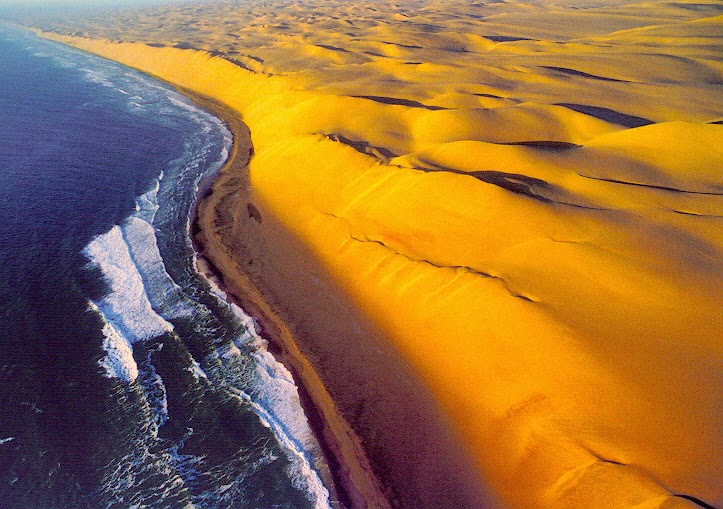
Third, it has spectacular natural beauty. I mean SPECTACULAR. Namibia is home to two of the most unique deserts on Earth; the Kalahari and the Namib. The Namib is a coastal desert - yep, nearly a thousand mile stretch of sand piled into enormous dunes (some a thousand feet high) that run right to the ocean.


Friday, April 10, 2015

Favorites with a Month to Go


I was thinking about some of the best things that have happened these first few months, so I decided to make a list of favorites and least favorites, mostly for me as I look back on this in the future.

Favorite Food – Well, this one is impossible to answer. Everything we ate in Vietnam and Japan was perfect, but Myanmar, India, and China were not far behind. If it has noodles and a broth, I seem to love it. Ostrich is amazing too - my favorite meat! I ate oryx (below), warthog, springbok, ostrich, zebra, eland and a couple other mammals that aren't coming to mind just during our visit to South Africa and Namibia. It was all tasty!


Saturday, March 14, 2015

Neptune Day!

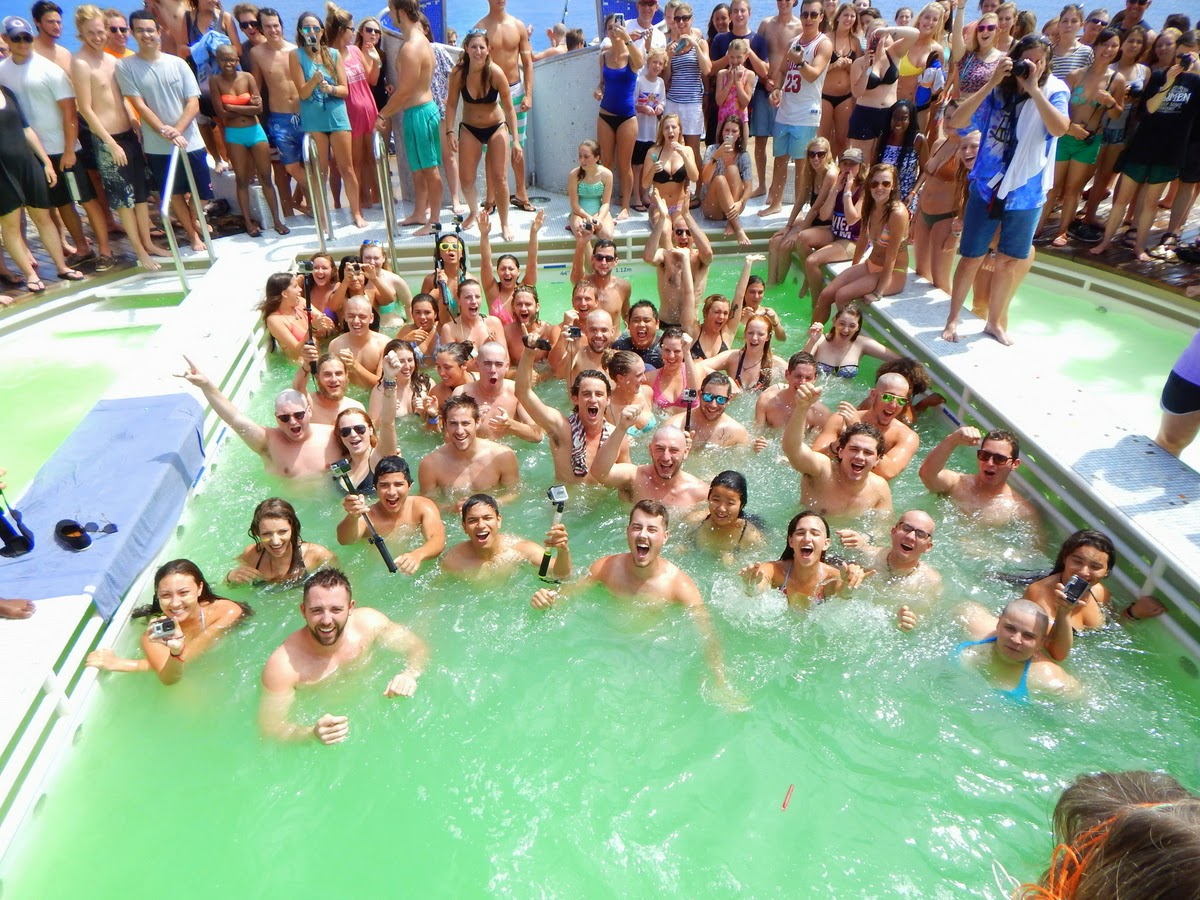
This ain't no pleasure cruise!  Well, at least that's what we keep telling ourselves as we head around the world with 650 college students. In all honesty,  we actually do work hard, and travel hard, and try to take every opportunity to learn more about the world and become better people in the process. But, on occasion....

Point any camera at a group of college students and this is what you get. Smiles are even bigger if you have a freshly shaved dome.
NEPTUNE DAY! Today is probably the first day where we haven't had any education at all (actually, not true, we did take the morning off to play, but classes are back on track this afternoon, and I'm grading papers and writing a proposal). This morning however, was 100% about having fun.


Wednesday, March 11, 2015

India – Beauty, Culture, Aggression, Cooking over Cow Shit and Open Defecation

Well, I just finished writing this post, and I'm rewriting the intro since it turned out completely different than I expected when I first started it. I guess that's fitting, since our visit to India was much the same. I wasn't expecting great things to be honest. We don't hear good things about India in the States - poor, crime-ridden, too many people, you will definitely get sick if you go there for a week, etc. Well, some things are true, most are not, and my stomach is perfectly fine.

We just spent nearly a week in India. It was the one country that probably scared our shipboard community the most prior to making port. Very few of our voyagers have been there, and the few that have were basically laughing at what everyone had in store.

This is in the bus parking lot for the City Palace in Jaipur. We parked right next to it and watched monkeys run around on the roof above (you will see one if you look). Yeah, a bit different. 
India has some of the greatest sights on this planet. And some of the worst. The most incredible smells (especially the food – it’s always been the center of the world in terms of the spice trade), and some of the foulest. You literally do not want to stand in the corner of ANY building in India – I did not go near a single one that did not smell like urine (except for the Taj Mahal), and most were still wet. It's horribly ugly in some places, yet I just saw the most beautiful thing I've ever seen humans create (the Taj Mahal, more in a minute). We were told we would love it and hate it, and probably at the same time. That is perhaps the most true statement I've heard about India.

The Taj Mahal from Agra Fort. 
Crapping next to a water hole. Saw this everywhere.